
The 10-Point Weight Loss Cheat Sheet: Simple Daily Habits That Actually Work
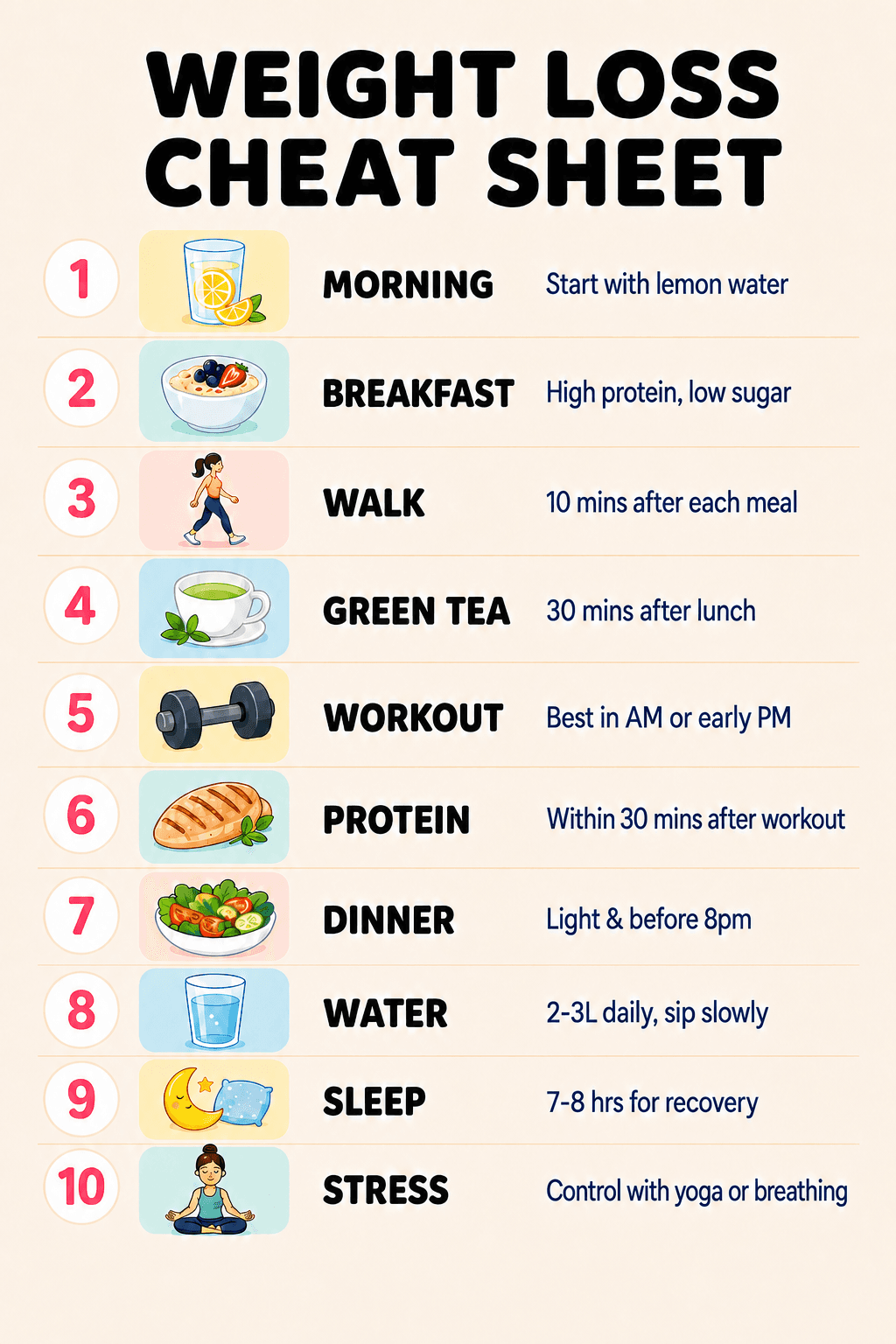
Most weight loss advice fails for one simple reason: it asks you to change everything at once. This cheat sheet takes the opposite approach. It's 10 small, specific habits you can slot into a normal day — no extreme diets, no two-hour gym sessions, no giving up entire food groups.
Each habit below is backed by basic, well-established nutrition and exercise science, and each one is small enough to actually stick. Save the infographic, pick one or two habits to start with this week, and layer in the rest as they become routine.
1. Start Your Morning With Lemon Water
Before coffee, before breakfast, drink a glass of warm or room-temperature water with fresh lemon juice. On its own, lemon water has no magic fat-burning effect — but it does two useful things: it rehydrates you after a night's sleep, and it gives you a low-calorie ritual that starts your day intentionally instead of reaching straight for something sugary.
Practical tip: squeeze half a lemon into 250-300ml of water and drink it within 30 minutes of waking up, before eating anything else.
2. Build a High-Protein, Low-Sugar Breakfast
What you eat first sets the tone for cravings all day. A breakfast high in protein and low in added sugar (think eggs, Greek yogurt, oats with berries instead of pastries or sugary cereal) keeps you fuller for longer and blunts the mid-morning energy crash that usually leads to snacking.
Practical tip: aim for at least 20-25g of protein at breakfast. If you're short on time, a scoop of protein powder in oats or a smoothie counts.
3. Take a 10-Minute Walk After Each Meal
A short walk after eating helps your body use the glucose from your meal more efficiently instead of storing as much of it as fat, and it's one of the easiest forms of movement to actually keep up with — no gym clothes, no planning required.
Practical tip: even a slow loop around the block or a walk to grab water counts. Consistency matters far more than pace here.
4. Sip Green Tea 30 Minutes After Lunch
Green tea contains catechins and a modest amount of caffeine, both linked to a small boost in metabolism and fat oxidation. It's not a substitute for good habits, but as a swap for a sugary afternoon drink, it's a simple upgrade.
Practical tip: brew it plain, without sugar or syrup, so you're not undoing the benefit. One to two cups a day is a reasonable target.
5. Time Your Workouts for Morning or Early Afternoon
The single best time to work out is whenever you'll actually do it consistently — but if you have flexibility, morning or early-afternoon sessions tend to align better with most people's energy levels and are less likely to get skipped when the day runs long.
Practical tip: lay out your workout clothes the night before if you're training in the morning. Removing friction is often more effective than motivation.
6. Get Protein Within 30 Minutes After Exercise
After a workout, your muscles are primed to use protein for repair and recovery. Eating a protein-rich snack or meal within about 30 minutes helps preserve lean muscle while you lose weight, which keeps your metabolism working in your favor.
Practical tip: a simple option is a protein shake, a handful of nuts with a piece of fruit, or leftover chicken and vegetables if a full meal is close by.
7. Keep Dinner Light and Before 8pm
Eating a lighter dinner earlier in the evening gives your body more time to digest before you sleep, and it naturally reduces late-night snacking — one of the biggest hidden sources of extra calories.
Practical tip: build dinner around vegetables and lean protein, and treat carb-heavy sides as the smallest portion on the plate rather than the largest.
8. Drink 2-3 Liters of Water Daily
Thirst is often mistaken for hunger, which means a lot of unnecessary snacking is really just dehydration. Sipping water steadily throughout the day — rather than chugging it all at once — supports digestion, energy, and appetite control.
Practical tip: keep a water bottle visible on your desk or in your bag. Visual cues are one of the most reliable ways to build a hydration habit.
9. Prioritize 7-8 Hours of Sleep
Sleep is where recovery happens, but it's also a major lever for weight loss: poor sleep raises ghrelin (the hunger hormone) and lowers leptin (the fullness hormone), which is why a bad night's sleep so often leads to a day of overeating.
Practical tip: set a consistent bedtime and keep screens out of the last 30 minutes before sleep — it's a small change that compounds over weeks.
10. Manage Stress With Yoga or Breathing
Chronic stress keeps cortisol elevated, which is linked to increased appetite and fat storage, particularly around the midsection. A few minutes of yoga, stretching, or slow breathing won't eliminate stress, but it gives your nervous system a daily reset.
Practical tip: try a simple 4-7-8 breathing pattern (inhale 4 seconds, hold 7, exhale 8) for two minutes when you notice stress building during the day.
Frequently Asked Questions
Do I need to follow all 10 habits at once to lose weight?
No. Trying to change everything at once is the most common reason habit changes fail. Pick one or two from this list, keep them for two to three weeks until they feel automatic, then add the next one.
Does lemon water actually help you lose weight?
Lemon water itself has no significant calorie-burning effect. Its value is in replacing a sugary morning drink with a hydrating, near-zero-calorie one, and in giving you a consistent morning ritual.
What's the best time to work out for weight loss?
The workout you'll actually repeat consistently is the best one. Morning and early-afternoon sessions tend to have the highest adherence for most schedules, but any consistent time works.
How much water should I drink daily to support weight loss?
A general target is 2-3 liters (roughly 8-12 cups) a day, adjusted for body size, activity level, and climate. Spreading intake throughout the day is more effective than drinking it all at once.
This article is for general informational purposes only and is not medical advice. Weight loss needs vary by individual health history, medications, and conditions. Consult a doctor or registered dietitian before making significant changes to your diet or exercise routine.
Want an easier way to stick with these habits?
Nuwmi turns this cheat sheet into a daily, judgment-free journal you can carry in your pocket.
Download for iOS